“We’re Genuinely in Love With This Stuff and We Wanna Make Sure That It’s Preserved” – A Chat With Stephen Kick, Nightdive Studios’ CEO



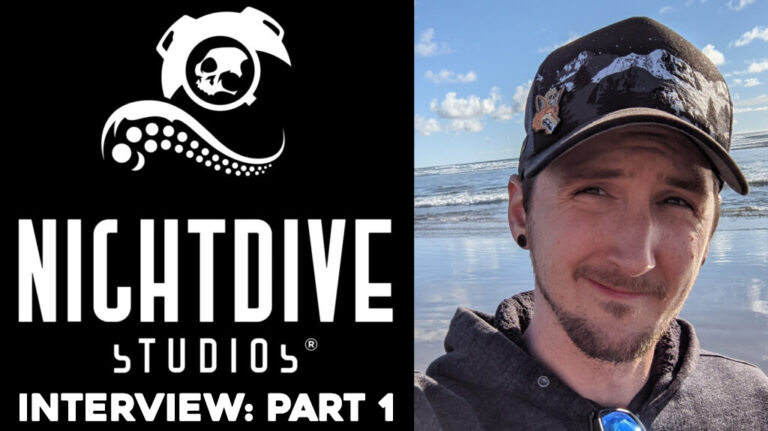
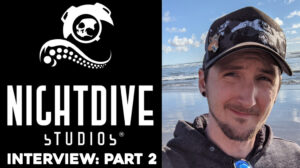
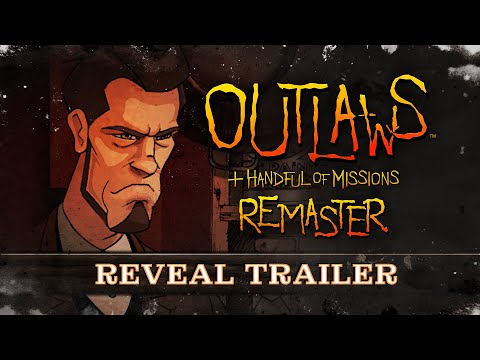
Stephen Kick is the Founder and CEO of Nightdive Studios. Best known for its faithful remasters that keep the original idea of a game intact but updated for modern games and systems, Nightdive is also keen on promoting game preservation. Its last release was the System Shock 2: 25th Anniversary Remaster, with a remaster of LucasArts’ 3D gunslinger title Outlaws due next.
Eneba recently chatted with Stephen about his gaming history, love of EC comics, Nightdive ethos, the state of the industry, and what the future might hold for the studio.
I’d like to start by asking, what got you into video games in the first place, and what’s your first, or an early memory, of playing video games?
Well, my earliest memories are probably playing Super Nintendo with a childhood friend. It wasn’t until I think around 1995 when my family got its first computer. We’d go to Electronics Boutique or Computer City or whatever. Back then they’d have these big bargain bins with big box PC games that you could get for five, ten dollars.
A lot of the early games I bought myself were not the best ones. But they were ones that I could afford. My dad actually started really getting into adventure games, so the first computer that we had, it came with a CD ROM drive. That meant we got a copy of Myst and we played that together and had a really great time.
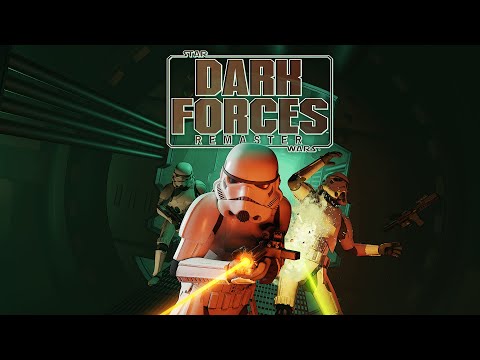
After that it was Seventh Guest, 11th Hour, Time Lapse, Morpheus…tons of adventure games. I would come home from school, get my homework done, we’d have dinner, and then my dad and I would sit at the computer and we’d play adventure games together. One of the first games they bought for me was Star Wars Dark Forces.
I saw that you’d said that you were personally very happy to get hold of Dark Forces and be responsible for remastering that.
That’s a really important one for me because it was my first game that my parents bought me, and it was one that I just loved. And so that had a real significance.
I grew up in Australia, in the late eighties, early nineties. And, like you, it was a lot of going to friends’ houses and playing on their games consoles. One of my school friends had a Commodore 64 so I’d go to their house and play stuff. When I was probably about 10 years old, my parents got me an Amiga 500. And I was really disappointed because I wanted a Commodore 64, and I didn’t realize till later that technically it was better.
It’s funny you mentioned that because I think it was a little bit opposite for me. We’d been playing Super Nintendo at my friend’s house, and then I remember going home and there was a yard sale that our neighbors were having on the way home.
I stopped and they were selling their Commodore 64 and all their games, and I was like, oh, this is awesome. I’ll buy this. I’ll have it in my room. And I remember lugging all that equipment home, making multiple trips, and my dad being like, ‘What did you just buy? You know, that ancient computer.’
I set it all up in my room and I remember trying to load Double Dragon and it taking three, four minutes just to load the title screen and being like, oh man, I made a huge mistake.
That’s really nice that your dad would do that with you, play games. Is that the sort of thing that you do with your son?
Well, he is into Fortnite, so he’s been playing computer games probably since he was like three. He is really good at using the mouse and keyboard and is very advanced, gaming-wise. We squad with him, my wife and I, we play Fortnite together and he often does better than anyone that we play with.
But, he’s also very unpredictable. So while we’re strategizing, like, okay, let’s find shields. Let’s get a vehicle. My son’s already halfway across the map, going one versus four against other squads and stuff.
It’s surprising, in a sense, how quickly they pick stuff up. We’ve got a PlayStation 5, so my six-year-old and his five-year-old brother got to grips with the game pad surprisingly easy. The youngest, he struggled for a bit with the whole ‘I’ve got to move with one stick and look with the other one’, but now he’s an absolute pro with it. They like Minecraft, unsurprisingly.
Yeah, mine as well. That’s what got him really into it, was Minecraft. It’s a very similar story like yours, just him wanting to play Minecraft. We built a little computer for him in the family room and sitting him down and him trying the mouse and keyboard for the first time and it being this totally alien interface to him.
And then three days later he’s moving and jumping and doing everything in the game. Like it’s totally natural. And seeing it happen that quick was like, oh my God, it’s amazing what a young mind can do.
It’s remarkable. I keep saying to ’em, I wish you could understand how lucky you are.
Right. They’re probably gonna be the subject to some piece that you write because you can see them evolve through the years and what they’re into, and how good they get. And it’s fascinating.
Because we are lucky enough to have these kinds of gaming memories and you’ve shared some with your dad, we’re both inspiring our kids and sharing memories with our kids. Hopefully if my kids, in 20 years, boot up Astro Bot they’d be like, ‘Oh yeah, I played this with my dad.’
Is that the kind of thing that you hope for with Nightdive? How much does the nostalgia aspect factor into what you do?
Well, that’s really what started the whole thing. When I started the company, I was trying to play games that inspired me as a kid to want to become a developer in the first place. I’m not sure if you had a chance to read what the catalyst was…?
You were in Central America and Mexico, 13 years ago maybe?
It was 2011, 2012. What had happened was, my girlfriend and I at the time were both working as character artists at Sony Online Entertainment. We got burned out just doing commercial art every day. So we quit and basically put all of our belongings into a Honda Civic and drove across the border into Tijuana. By the time we got down to Guatemala, I was on our Chromebook and I was playing video games like Full Throttle and Fallout, basically small DOS games for the most part that would run on that hardware.
I tried to get System Shock 2 to run, couldn’t get it to start, and that’s kind of what led me on that whole search for the IP and understanding what happened to Looking Glass. And it led me to discover that the rights had gone to an insurance company in the Midwest, here in the United States, and just kind of cold emailing them.
Then, getting a response right away that basically said they were open to me doing something with it. And being in that position of, Hey, I know how Steam works. I know how GOG works. I’ve got friends who are engineers who could help me get this thing running. We could be the ones responsible for making this available digitally again.
But to your earlier point, after Nightdive had been established, the games that we went after – because it was just me – were the games that I played with my dad. So it was a lot of those adventure games I mentioned.
Like you go way back and you see our catalog, it’s a bunch of really offbeat, obscure adventure games with a couple of hits in between. And that’s really what drove the decision making, was my personal nostalgia. What I’ve come to find over the last 13, 14 years, mostly through fan mail I’ve received, is that a lot of the people that are enjoying the games now played them with their parents when they were six, seven years old.
One instance for the System Shock 2 25th Anniversary Edition, when we announced that, we had somebody reach out to me. They said that that game was important in the memories they had of their father before he passed. And they showed me all these examples, like, ‘I’ve got the strategy guide hanging up on the wall because he wrote in it and he took notes in it.’
He asked me if there was a way that we could get his Steam name in the game somewhere, so we put it in the opening scroll of the hud, the main menu there.
That’s just: Thank you for reaching out and sharing this memory and this story with us. It’s a small token, but we hope we could preserve System Shock forever and your dad’s name is gonna always be there, so when you boot up the game and you play that game, it’ll be like there’s a part of him there still. I love being able to do stuff like that.
That’s really nice, because it shows that you’re human. Cause you didn’t have to do that, did you? You could just be like, oh, sorry. It’s not possible, or even ignored the request. But it also ties into preserving someone’s memory, not just the game.
So I’ve read that sometimes the other team members can go, I’d really like to pick this game. Has anyone picked, or are you interested in going after, any lost or canceled games?
We’ve discussed it. There are some games that were never released that are high on our list. One that I’ve been looking at personally along with one of our lead artists, this gentleman named Joel Welsh is…I believe it was a Build engine-powered Hellraiser game. We’ve managed to dig up some really interesting assets and information about it.
And honestly, I didn’t even know about it until Joel told me. But it’s one of those games that’s like, wow, that would’ve been super cool had they managed to release it back in the nineties when they were developing it. I think that it would be really cool to finish development on something like that and see it finally released and tell the history about it.
The closest we’ve got to anything like that is probably with the Shadow Man remaster that we did a number of years ago, where we were working with some of the original developers and they were telling us, ‘Oh, we would’ve had these levels in the game had we had more time and a bigger budget.’
And we’re like: ‘Well, the skeleton and the design is right there and we have you. Let’s do it, let’s finish it.’ And so they worked with our artists and level designers and some of our designers, and they basically finished the game the way that they wanted to back in the nineties.
With what you’ve just said there about the Shadow Man team, how often do you manage to get actual help from the people that were originally involved?
It’s a lot more often now than it used to be, and I think that’s just because of our ability to really take advantage of those resources. Five, six years ago, our team size was still relatively small. So going out and finding the original developers and then asking them if they wanted to help, we often had budgetary considerations involved, whereas now we’re a lot more agile as far as that goes.
And honestly, I wish that we had done that kind of stuff a lot earlier because it’s so valuable from the preservation perspective. A lot of these developers have amazing stories to tell. They often still have some assets from their time working on the game that we now integrate into what we call the Vault, which is like a behind the scenes collection of everything that we’ve managed to find on our way to re-releasing the game.
I think with the addition of working with some of the original developers, they’ve reached new heights of being historical time capsules more than anything, and kind of paying respect to the artists that created the thing to begin with.
The Thing Remastered is a really great example of that. We had two of the original developers actually come on and work on the game with us. That was invaluable; they were able to share not only the stories of what happened, but fill in some of the gaps of like, what would you have done here? Or what were you hoping to achieve? We can do that now, that kind of thing. And people love that game. It was one of our best sellers and I think that has a lot to do with it.
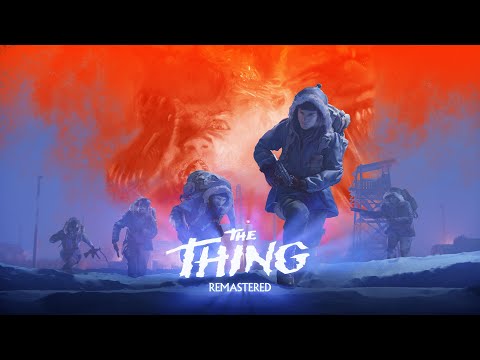
Am I right in saying that The Thing is also one of your personal favorites?
Oh yeah, yeah, absolutely. But along with playing video games with my dad, I was actually just telling the story yesterday…he subscribed to EC comics, the reprints of the classic horror comic books that came out in the nineties. Once a month we’d get this big manila envelope in the mail and it would have Tales from the Crypt , the Vault of Horror, Two Fisted Tales, Weird Science, basically the entire run of EC comics. And then he would read those to me at night, like bedtime stories.
That’s amazing.
It was funny ’cause I was reminiscing about this yesterday with a guy and we’re looking at buying a comic book collection and there’s some EC stuff in there and he’s like, did you turn out okay? You know, some of that stuff was super dark because the government got involved because they thought that those books were gonna warp kids’ minds back in the fifties, you know? And here’s your dad reading to you at like five years old right before bed.
Have you ever heard of the – I mean they’re defunct now, obviously, but from the same kind of time period – there was a comic publisher called Skywald, and they put out a ton of similar comics like Scream, Psycho, Nightmare. A lot from the seventies, and a lot of them had that EC kind of sensibility.
Was that a UK title?
They were a US-based publisher. And they had a lot of artists who went on to, for example, Marvel and DC. Actually, I’m gonna use that to ask you about your art, because I’ve seen that you are an artist. How long have you been into illustration?
My dad is an artist, so pretty much as soon as I could pick up a pen and pencil or crayons or whatever, I’ve been drawing. Coloring and just, you know, putting my imagination to paper or to a Photoshop file these days. My whole life kind of just revolves around art.
That’s another big major aspect of Nightdive, and what we do is we believe that all these games are art, and we wanna portray them that way and show them the respect that other mediums get, like film and music.
That was something that I was talking about with Frank Gasking. He’s finding a lot of people that he reaches out to are genuinely surprised that someone is interested in this thing they’ve done, considering it could have been 20, 30, even 40 years ago, some of them.
But he also said – and I wondered if this is true for you guys – he sometimes comes across people that are either super protective of their work, or he finds people that don’t want him touching their ‘baby’, so to speak. Have you guys at Nightdive ever encountered anything like that?
Yep. There’s been the whole range of people from, ‘Oh, I’m so glad that somebody still cares about this, this is everything I have, it’s been neatly organized. I’ve maintained it over the last 25 years. I’m thrilled that anybody even wants to do anything with it.’ To, ‘How did you get this email? Don’t ever contact me again. Yeah, I have what you’re looking for, but there’s no way in hell you’re gonna get it.’
There’s everything in between, right. And, most of the time, if we meet somebody who’s at first a bit hesitant to talk to us, all it really takes is just getting on a call with them and being like, look, we’re genuinely in love with this stuff and we wanna make sure that it’s preserved. I played this in 1996 and here are my memories of it.
And then they go, ‘Oh, you’re a human being. You’re not this corporate leech trying to just profit off this thing.’ So I mean, nine times outta 10 we make friends and we bring people on that way too.
The Thing is a great way to talk about that. I wouldn’t say that the original developers were hesitant at first, but I think they were definitely a little like, how good are you? Could you actually do this? Would you be able to facilitate our needs as the original developers?
It’s interesting the different types of personalities we’ve encountered and for the most part everybody has been very, very helpful and cooperative.
I know you’ve all the adventure games you mentioned, Dark Forces, and The Thing, but do you still have a holy grail that you’d love to get your hands on, to remake or remaster?
Recently I’ve kind of stopped talking about the one game and branched out to a couple of others that have just been on my list for the last 10, 12 years. The obvious one is No One Lives Forever. That’s one of my all time favorites and I think deserves more than most games to be remastered and rereleased for people to enjoy. But then I’ve been talking a lot about Eternal Darkness, a Silicon Knights, GameCube, Lovecraftian action adventure.
Three other games, the Inscape Trilogy is what I refer to them as, and it’s The Residents’ Bad Day at the Midway, Drowned God, and the Dark Eye. They’re all very different, incredibly creative takes on adventure games that not a lot of people have ever heard of before.
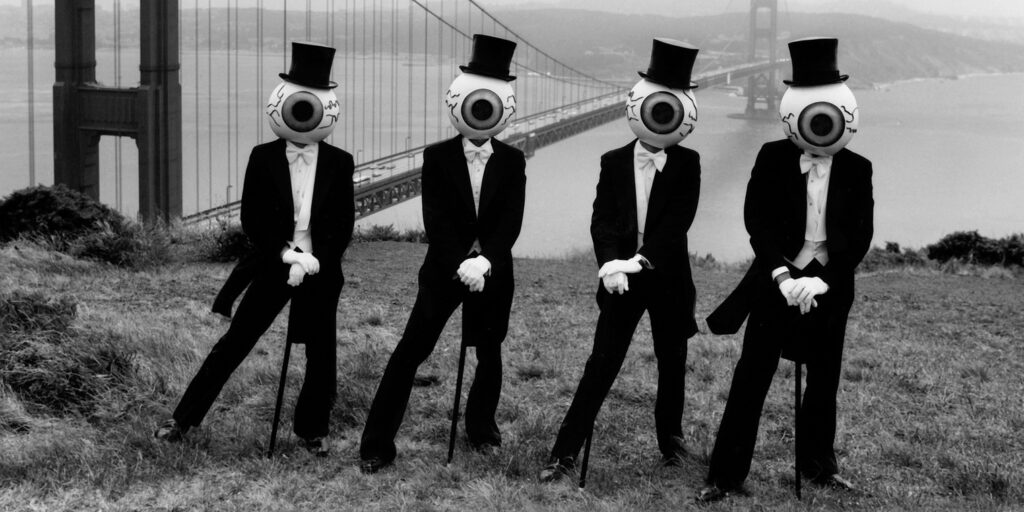
Yeah, they’re new to me.
I played those with my dad and those were bargain bin games. So we’re kind of going back to the top of the discussion here. But we found those games ’cause they were like five bucks. My dad and I, we got all those and we played them and they all have something just so unique to offer, for people who are willing to just try them out.
Just the other day, my dad and I went to the local comic book convention here in Portland and something came up where we were talking about Drowned God again. And it’s like this thing that every once in a while it resurfaces into our consciousness and we want to talk about it and play it again ’cause it’s so weird.
And the history behind it is kind of dark and macabre. If you really read into what happened to the guy who created it and designed it…some real horrific stuff happened.
It’s bizarre, but if you read the story about Harry Horse, I wonder if something happened to him, like this game, the development of it caused him to do the things that he did.
I’m definitely gonna check that out (it turns out he died under very weird, grisly circumstances).
So anyways, I wanna release those games. There’ll be more akin to some of the earlier stuff that Nightdive did, releasing games with DOSBox compatibility, that kind of thing. But they definitely deserve to be out there. And I think that there’s an audience that would definitely appreciate it.
Stay tuned for part 2 of this interview, where we talk more about the future of Nightdive, personal heroes, and game preservation.